Fishin' Frenzy Tips: Separating Myth from Method
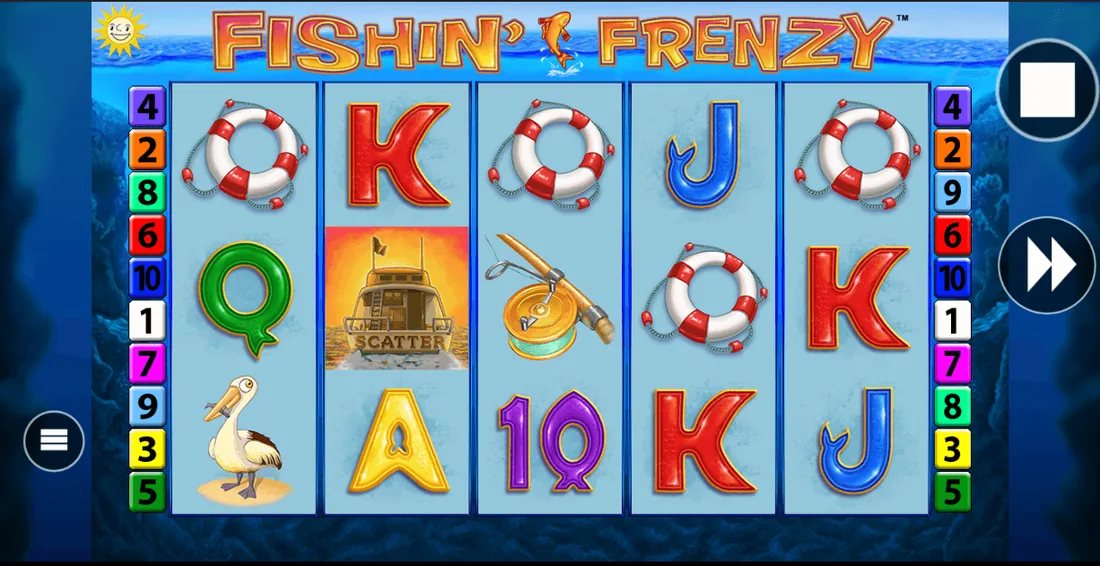
96.12% return-to-player sounds generous until you realise it's an average across millions of spins, not a promise for your session. Fishin' Frenzy sits in the middle of Blueprint Gaming's range — higher RTP than some of their volatility monsters, but still governed by a random number generator that doesn't care how many spins you've just lost.
Every «strategy» you'll find online — hot and cold streaks, pattern tracking, stake progression — runs into the same wall: certified RNG software tested by independent labs. The real tips aren't about beating the algorithm; they're about controlling what the algorithm can't touch — your stake, your stop point, and how you structure a session under UK rules that cap your risk before you even start.
Why Most «Strategies» Fail Before the First Spin
The Martingale system — doubling your stake after each loss — is the most persistent myth in slot play, and Fishin' Frenzy's medium volatility makes it look tempting. You hit a dry spell, you double up, the free spins trigger, you're back in profit. Except UK stake caps kill the progression before it gets started.
- £5.00 maximum per spin for players 25 and over
- £2.00 cap if you're aged 18–24 (operator-enforced, tied to age verification)
- Four losing spins at £1.25 and you're already at the ceiling — no room to double again
Pattern tracking — waiting for X dead spins before betting big — assumes the RNG has memory. It doesn't. Each spin is an independent event with the same 96.12% RTP, whether it's your first or your five hundredth. Blueprint's server-side RNG is tested by Gaming Laboratories International and certified under UKGC technical standards; the outcome is determined the millisecond you press spin, not influenced by prior results.
What You Actually Control (And What That's Worth)
Strip away the noise and three levers remain: stake size, session length, and which mode you play. None of them change the RTP, but they dictate how long your bankroll lasts and whether you're still playing when variance swings your way.
Medium volatility means prize clusters: you'll get small wins every few spins (the fish symbols), then long gaps before a Free Spins round lands. If you're betting £5.00 a spin, a £50.00 deposit gives you ten attempts to hit that scatter combination — variance says you'll miss most of the time. Drop to £0.50 and the same budget stretches to a hundred spins, enough to weather the dry spells and catch at least one feature.
Mode choice matters more than most players realise. Demo play — available on UKGC-licensed sites after you've logged in and passed age verification — uses the same RNG as real-money mode, but it lets you test stake sizes and watch volatility patterns without risking cash. The catch: you can't withdraw demo winnings, obviously, and the psychological gap between play money and real money is vast. A £500.00 demo win feels different to £500.00 you can send to your bank via Faster Payments.
Reading Volatility (Without a Maths Degree)
Medium volatility is a marketing term; what it actually means is «you'll see wins often enough to stay interested, but the big multipliers are rare». Fishin' Frenzy's Free Spins feature — where all fish symbols are collected by the fisherman for instant prizes — is the only route to headline wins, and it triggers roughly once every 100–150 spins depending on the sample size.
- Base game: frequent small wins (5–20× stake) from fish combinations, long stretches of dead spins between them
- Free Spins entry: 3+ scatter symbols, probability somewhere between 0.67% and 1.00% per spin
- Free Spins payout: wildly variable — you might collect £5.00 worth of fish or £200.00, depending on how many land and their values
- Post-feature drought: volatility often clusters losses after a big win; the RNG doesn't «owe» you another feature soon
If you're tracking your session and notice thirty spins without a fish win, that's not a pattern — it's variance doing what medium volatility allows. The danger is chasing the feature by increasing your stake, assuming it's «due». It isn't. The scatter probability is identical on spin 1 and spin 300.
Mistakes That Cost More Than the Stake
The expensive errors aren't usually about gameplay — they're about ignoring the structure around it. UK affordability checks start from £150.00 net deposits a month; if you trip that threshold, the operator pulls credit-reference data and may ask for bank statements. It's intrusive, it's slow, and if you've been chasing losses, it arrives at the worst possible moment.
- Depositing £200.00 in a week without setting a limit: you've triggered the first stage of affordability checks, and the operator can freeze your account until you provide documents
- Using someone else's debit card: instant account closure under anti-money-laundering rules; credit cards are banned for gambling since 2020, but even a partner's debit card violates UKGC terms
- Skipping GAMSTOP when you know you should use it: the six-month minimum self-exclusion blocks every licensed site; trying to dodge it with unlicensed offshore operators is both illegal and unprotected
Another common trap: claiming a welcome bonus without reading the wagering requirement. A 100% match up to £100.00 sounds like free spins, but the wager is typically 30–40× the bonus amount — that's £3,000.00 to £4,000.00 of total stakes before you can withdraw a penny. Fishin' Frenzy qualifies for most slot wagers, but if you hit a £500.00 Free Spins win on spin five and you've still got £2,500.00 of wagering left, you're not cashing out yet.
Structuring a Session With a Pre-Set Limit
The only «strategy» that survives contact with RNG is deciding what you're willing to lose before you start, and walking away when you hit it. Fishin' Frenzy's medium volatility gives you enough small wins to make that harder than it sounds — a £10.00 win after a £30.00 loss feels like progress, even though you're still down £20.00.
| Bankroll | Stake per spin | Spins available | Likely outcome | |
|---|---|---|---|---|
| £20.00 | £0.20 | 100 spins | 1–2 feature triggers possible; small wins keep you afloat | → |
| £50.00 | £0.50 | 100 spins | Comfortable buffer; you'll see the volatility range | → |
| £50.00 | £2.00 | 25 spins | High risk of zeroing out before a feature lands | → |
| £100.00 | £5.00 | 20 spins | Maximum UK stake; variance will dominate — feast or famine | → |
Set the deposit limit in your account settings before you play, not after. UKGC operators must offer daily, weekly, and monthly limits; once it's active, you can't override it on impulse. If you deposit £50.00 and set a £50.00 daily limit, that's your ceiling — the account won't accept more until the next day, even if you've just watched five dead spins and you're convinced the feature is coming.
Session structure: decide your win target and loss limit as a percentage of your starting bankroll. A common split is 50% loss cap (walk away at £25.00 if you started with £50.00) and 100% win target (cash out if you double up to £100.00). The loss cap protects your bankroll; the win target ensures you actually bank a good run instead of feeding it back into the slot.
Where UK Rules Change the Equation
Fishin' Frenzy plays differently in the UK than it does in unregulated markets, and the differences are structural. The £5.00 stake cap is the most visible — it kills high-roller strategies and limits your exposure per spin — but the deeper impact comes from affordability checks and the 18–24 age bracket restrictions.
- £2.00 maximum stake if you're under 25: operators verify your age via credit-reference data, and the cap is hard-coded into the game client once your date of birth is confirmed
- Affordability thresholds from £150.00 a month: deposit £50.00 three times in thirty days and you're into the first stage; the operator pulls soft credit data and may ask for proof of income if your losses accelerate
- GAMSTOP integration across every UKGC-licensed site: one registration blocks Fishin' Frenzy and every other game on licensed platforms for six months minimum; there's no partial exclusion
The stake caps mean you can't chase losses aggressively even if you wanted to. Compare this to offshore unlicensed sites — often marketed with «no limits» or «crypto deposits» — where you can bet £50.00 a spin and blow a month's salary in ten minutes. Those sites aren't illegal to use, but they're illegal to advertise in the UK, and they don't answer to the UKGC if something goes wrong. No dispute resolution, no GAMSTOP, no deposit limits unless you set them manually.
One under-discussed benefit of UKGC rules: gambling winnings are tax-free for players. Blueprint pays 40% Remote Gaming Duty (raised in April), but that's priced into the RTP — you keep every penny of a £500.00 Free Spins win. Offshore sites in some jurisdictions might report your winnings to tax authorities; UK-licensed operators don't, because there's no tax to report.
FAQ
Can I use a VPN to bypass the £5.00 stake cap on Fishin' Frenzy?
Technically possible but immediately detectable and a breach of UKGC terms. Operators verify your location via IP, device data, and payment method; if your debit card is UK-issued, you're subject to UK stake caps regardless of the VPN. If caught, your account gets closed and any balance forfeited — not worth the risk for a higher stake that just burns your bankroll faster.
Does playing Fishin' Frenzy in demo mode use the same RNG as real-money spins?
Yes — Blueprint's RNG is server-side and identical for demo and real-money play, certified by Gaming Laboratories International. The difference is psychological: demo wins don't trigger the same dopamine response, so your behaviour shifts. Use demo to learn volatility patterns and test stake sizes, but don't assume your demo session predicts what happens when real money is on the line.
How long after a Free Spins feature should I expect another one?
No reliable expectation — the scatter trigger probability is roughly 0.67–1.00% per spin, independent of prior results. You might hit two features in twenty spins or go three hundred spins without one. Medium volatility means the gap is shorter on average than high-volatility slots, but «average» includes sessions where you never see a feature at all. Don't increase your stake assuming the next one is due; it isn't.
What happens if I hit affordability checks mid-session?
The operator freezes deposits (but not withdrawals) until you provide documents — usually three months of bank statements or payslips. First stage uses soft credit data and happens around £150.00 net deposits a month; enhanced checks kick in at higher thresholds. Processing takes 48–72 hours, sometimes longer. If you're mid-bonus wagering when it hits, you can keep playing with your existing balance but can't top up, which often means you can't complete the wager and the bonus gets forfeited.